AI Chatbots for Customer Support: Top Benefits for Small Businesses
Published: 02 May 2026
AI Chatbots for Customer Support have a lot to handle. Customers ask questions. Orders need updates. Leads come from websites, social media, and email. But many small teams do not have enough time to reply quickly.
I understand how frustrating this can feel. You want to help every customer. But you also need to run your business.
This is where AI chatbots can help.
AI chatbots can answer common questions, guide buyers, collect leads, and send hard issues to a real person. They do not replace good service. They support it.
In this guide, I will explain the benefits of AI chatbots in customer service, share real customer service chatbot examples, and show how chatbots for small businesses can support both service and marketing.
What is an AI Chatbot?
An AI chatbot is a tool that talks with customers through text. It can work on your website, mobile app, WhatsApp, Facebook Messenger, Instagram, or live chat box.
A basic chatbot follows set answers. A smarter AI chatbot can understand more natural questions and give better replies.
For example, a customer may ask:
Where is my order?
The chatbot can check the order status or guide the customer to the right page.
A customer may ask:
“Do you offer same-day appointments?”
The chatbot can answer right away or collect details for your team.
That saves time for both the customer and the business.
What Are the Benefits of Using AI Chatbots?
Many business owners ask, “What are the benefits of using AI chatbots?”
The simple answer is this:
The simple answer is this: AI chatbots help small businesses respond faster, reduce repetitive work, improve the customer experience, and capture more leads. They also help Automate Customer Support for Small Businesses by handling routine queries and scaling support without adding full-time staff.
Let’s break this down in a listicle format.
10 Benefits of AI Chatbots in Customer Service for Small Businesses
1. AI Chatbots Give Faster Replies
Customers do not like waiting. If they ask a simple question, they want a quick answer.
An AI chatbot can reply in seconds. It can answer questions about hours, pricing, shipping, returns, and bookings.
Example:
A salon chatbot can answer, “What time do you close?” even when the staff is busy with clients.
Tip:
Start by adding answers to your top 20 customer questions.
2. They offer 24/7 support.
Small businesses often close at night. But customers still visit websites after hours.
A chatbot can help them when your team is offline.
Example:
An online store can answer shipping questions at 11 pm The customer does not need to wait until morning.
This does not mean your team works all night. The chatbot handles simple support while your team rests.
3. They Reduce Repeated Questions
Most businesses hear the same questions every day.
Common questions include:
- What are your hours?
- How much does it cost?
- Do you deliver?
- How do I book?
- What is your return policy?
AI chatbots can answer these questions again and again.
Tip:
Use your old emails, calls, and social media messages to build your chatbot answers.
4. They Lower the Workload for Small Teams
Small teams already do a lot. They answer calls, manage orders, post on social media, and serve customers.
A chatbot can take simple tasks off its plate.
Example:
A local bakery can use a chatbot to answer cake order questions before staff call the customer.
This helps the team focus on work that needs a human touch.
5. They Improve Customer Experience
Good support feels fast, clear, and helpful. AI chatbots can make that easier.
A chatbot gives customers a simple path. It can guide them to the right answer, page, product, or person.
Example:
A gym chatbot can help users compare membership plans. It can also send them to a sign-up form.
When customers get help quickly, they feel more cared for.
6. They Help Capture More Leads
A chatbot can collect customer details while your team is busy.
It can ask for:
- Name
- Phone number
- Service needed
- Budget
- Best time to call
This is helpful for local service businesses.
Example:
A plumber can use a chatbot to collect job details before calling the customer.
This saves time and helps the team prepare better.
7. They Support Sales and Marketing
A marketing chatbot does more than answer support questions. It can guide visitors toward a sale.
It can:
- Recommend products
- Offer discount codes
- Book calls
- Collect leads
- Ask simple buyer questions
- Send users to the right offer
Some businesses also use chatbot marketing services to plan, build, and improve these chatbot flows.
Example:
A clothing store chatbot can ask, “Are you shopping for men, women, or kids?” Then it can guide users to the right collection.
8. They Give Consistent Answers
Humans can make mistakes when they rush. One team member may give one answer. Another may give a different answer.
A chatbot uses the same approved information each time.
This helps with:
- Pricing
- Policies
- Delivery rules
- Booking steps
- Product details
Tip:
Update your chatbot whenever your prices, hours, or policies change.
9. They Can Hand Off Complex Issues to Humans
A good chatbot does not try to handle everything.
It should send users to a human when needed.
Example:
If a customer is angry about a refund, the chatbot can collect details and alert your team.
This keeps support smooth. It also protects the customer relationship.
10. They Help You Learn From Customer Questions
Chatbot reports can show what customers ask most.
You may learn that many people ask about shipping, pricing, booking, or product sizes.
You can use this insight to improve:
- Website pages
- FAQ sections
- Product descriptions
- Email replies
- Ads
- Sales pages
This makes your whole business easier to understand.
AI Chatbot Support Levels
Not every chatbot works the same way. Here are four simple levels.
Basic Support Chatbot
This chatbot answers simple FAQs.
It helps with:
- Hours
- Prices
- Shipping
- Returns
- Contact details
Smart AI Chatbot
This chatbot understands more natural questions. It can give more flexible answers.
For example, it may understand that “Where’s my package?” means “Track my order.”
AI Chatbot with Human Handoff
This is often the best choice. The bot answers simple questions and sends complex ones to your team.
AI Chatbot for Marketing
This chatbot helps with sales and leads.
It can recommend products, book calls, collect emails, and guide buyers.
How to Use Chatbots for Small Business Customer Support
Here is a simple step-by-step plan.
Step 1: List Your Common Questions
Write down the questions customers ask most.
Start with support emails, social media messages, calls, and live chat history.
Step 2: Choose the Right Chatbot Platform
Pick a tool that fits your business size and budget.
Look for a simple setup, website integration, and human handoff.
Step 3: Add Business Details and FAQs
Add your hours, prices, services, policies, and product details.
Keep your answers short and clear.
Step 4: Connect It to Your Website or Social Media
Place the chatbot where customers already contact you.
This may include your website, Instagram, Facebook Messenger, or WhatsApp.
Step 5: Add Human Handoff
Give customers a way to reach a real person.
This builds trust.
Step 6: Test Before Launch
Ask the chatbot real questions.
Test easy questions, unclear questions, and angry customer messages.
Step 7: Track and Improve
Review chatbot conversations every week at first.
Fix weak answers. Add missing questions. Improve the flow.
What Not to Do With AI Chatbots
Do not automate every conversation.
Do not hide human support.
Do not use unclear answers.
Do not ignore customer feedback.
Do not set up the chatbot once and forget it.
A chatbot works best when you keep improving it.
Real Customer Service Chatbot Examples
Here are simple customer service chatbot examples for small businesses.
| Business Type | Chatbot Use | Main Benefit |
| Online store | Tracks orders and returns | Fewer support tickets |
| Restaurant | Answers menu and booking questions | Fewer phone calls |
| Salon | Books appointments | Saves staff time |
| Real estate agent | Collects buyer details | Better lead capture |
| Dental clinic | Answers, service, FAQs | Faster patient support |
| Local service business | Collects quote requests | Easier follow-up |
| SaaS company | Helps users get started | Better onboarding |
These examples show how chatbots for small businesses can support both service and sales.
When Not to Let an AI Chatbot Handle Everything
AI chatbots are useful, but they have limits.
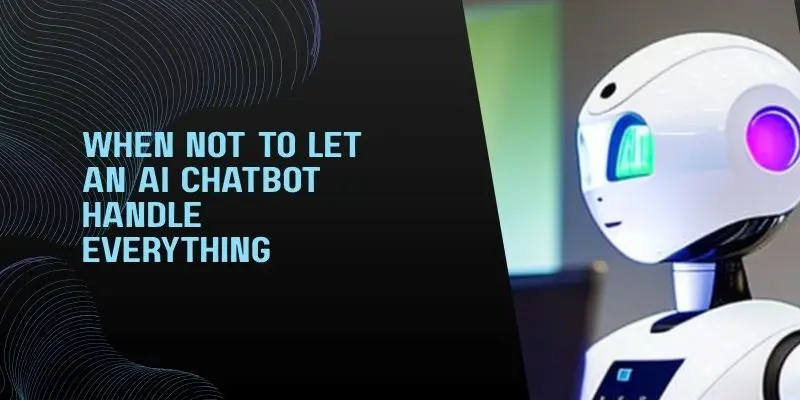
Do not let a chatbot fully handle:
- Angry customers
- Refund disputes
- Legal questions
- Financial questions
- High-value sales leads
- Sensitive personal information
- Complex technical issues
In these cases, send the customer to a trained human.
This keeps your support safe, clear, and respectful.
Common Misconceptions About AI Chatbots
Misconception 1: AI Chatbots Replace All Human Support
This is not true.
AI chatbots handle simple tasks. Humans should handle complex issues and emotional conversations.
Misconception 2: Only Big Companies Need Chatbots
Small businesses can benefit too.
A small team may need chatbot support even more because every minute matters.
Misconception 3: Chatbots Are Only for Customer Service
A marketing chatbot can help with lead capture, product suggestions, and sales support.
Misconception 4: Chatbots Are Hard to Set Up
Many modern tools are no-code. That means you can build basic flows without a developer.
How to Choose the Right AI Chatbot or Chatbot Marketing Service
If you want to choose a chatbot tool or service, look at these points:
- Budget
- Ease of use
- Website integration
- Social media integration
- CRM connection
- Human handoff
- Reporting dashboard
- AI answer quality
- Support from the provider
If you want faster replies and fewer missed leads, start with a simple chatbot that answers your top customer questions.
You can also hire chatbot marketing services if you need help with strategy, setup, and optimization.
What to Expect After Adding an AI Chatbot
Do not expect magic overnight.
Expect steady improvements like:
- Faster replies
- Fewer repeated questions
- Better lead capture
- Lower staff workload
- More consistent answers
- Better Customer Experience
Your results improve when you update the chatbot often.
A chatbot is not a one-time task. It is a support tool that gets better with care.
Share Your Chatbot Experience
Have you used an AI chatbot in your small business?
Share your story.
Your experience may help another business owner choose the right path. You can share what worked, what failed, and what you would do differently next time.
Real stories make this topic more useful for everyone.
Conclusion
AI chatbots can improve customer support for small businesses by providing faster responses, reducing repeat questions, and helping teams focus on more important work.
The real value comes from using them wisely.
Start small. Answer your common questions first. Add human handoff. Track results. Keep improving.
That is how small businesses can use AI chatbots to give better support without losing the human touch.
FAQs
AI chatbots help small businesses reply to customers faster and with less stress. They can answer common questions about prices, hours, orders, bookings, and services. They also help teams save time by handling repeated questions. This lets business owners focus on sales, service, and growth. The main benefits of AI chatbots in customer service are faster replies, better support, and smoother customer communication.
AI chatbots improve customer service by giving quick and clear answers. Customers do not need to wait long for basic help. A chatbot can guide them to the right page, product, form, or support option. It can also work after business hours, which is helpful for small teams. This makes the customer experience faster, easier, and more reliable.
Yes, chatbots for small business customer support can be very helpful. They work well for simple tasks like answering FAQs, booking appointments, tracking orders, and collecting customer details. They can also reduce the daily workload for small teams. However, they should not replace human support fully. The best setup uses a chatbot for simple questions and a real person for complex issues.
Customer service chatbot examples include order tracking bots, FAQ bots, booking bots, and product help bots. An online store can use a chatbot to answer shipping and return questions. A salon can use one to book appointments. A restaurant can use one to answer menu and table booking questions. These examples show how chatbots can save time and improve customer support.
Yes, AI chatbots can help small businesses collect more leads from websites and social media. A chatbot can ask visitors for their name, email, phone number, and service needs. It can also guide them to the right offer or booking page. This helps your team follow up with better information. A well-planned marketing chatbot can turn more visitors into real business leads.
A marketing chatbot is a chatbot that helps with sales and lead generation. It can recommend products, share offers, book calls, and collect customer details. It can also answer buying questions before a customer leaves your website. This makes your marketing more active and helpful. Many businesses use chatbot marketing services to build better chatbot flows and improve conversions.
No, AI chatbots do not fully replace human customer support agents. They are best for simple and repeated questions. Human agents should still handle angry customers, refunds, sensitive issues, and complex problems. This balance gives customers both speed and care. A strong support system uses AI chatbots and human agents together.
You can use chatbots for small business marketing by adding them to your website, landing pages, or social media. The chatbot can welcome visitors and ask what they need. It can suggest products, answer questions, and collect contact details. It can also send users to offers, booking pages, or sales forms. This helps small businesses get more value from their traffic.
Good chatbot marketing services should help you build a chatbot that matches your business goals. They should create clear answers, smart flows, and simple lead forms. They should also connect the chatbot with your website, CRM, email tool, or social media. Human handoff and reporting are also important. The right service should make your chatbot helpful, not pushy.
AI chatbots are worth it if your business gets many repeated customer questions. They can save time, improve reply speed, and support customers after hours. They also help small teams stay organized and reduce missed leads. Still, they need a good setup and regular updates. When used the right way, AI chatbots can improve both customer service and business growth.





- Be Respectful
- Stay Relevant
- Stay Positive
- True Feedback
- Encourage Discussion
- Avoid Spamming
- No Fake News
- Don't Copy-Paste
- No Personal Attacks
- Be Respectful
- Stay Relevant
- Stay Positive
- True Feedback
- Encourage Discussion
- Avoid Spamming
- No Fake News
- Don't Copy-Paste
- No Personal Attacks
