How to Measure Customer Success: 5 Key Metrics Every Manager Should Track
Published: 12 May 2026
As someone deeply involved in customer success, I know how challenging it can be to measure the impact of your efforts. You may have dashboards full of numbers, but which metrics truly matter? In this article, I’ll walk you through customer service metrics examples, explain what are the 5 key performance indicators for customer service, and share actionable tips on how to measure customer success that managers can use to drive results.
Why Measuring Customer Success Matters
Customer success is more than keeping clients happy. It directly impacts retention, growth, and revenue. Imagine investing in a new tool or support system without knowing if it actually improves customer outcomes. That’s where metrics come in.

I often hear managers say, “I feel like my team is doing well, but I don’t know for sure.” That’s normal. By tracking the right KPIs, you gain clarity and can make informed decisions. It’s also motivating for your team—they see the real impact of their work.
The 5 Key Performance Indicators for Customer Service
Let’s break down the 5 KPIs every customer success manager should track, along with practical examples and measurement tips.
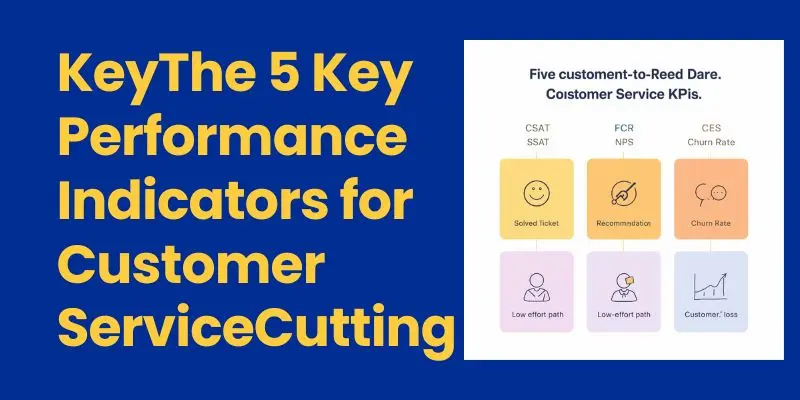
1. Customer Satisfaction (CSAT)
CSAT measures how satisfied customers are after interacting with your support team. Typically, it’s a short survey asking: “How satisfied were you with your experience?”
Why it matters: CSAT gives immediate insight into service quality and can highlight trends over time.
How to measure:
- Collect post-interaction surveys via email or chat.
- Use a simple scale, eg, 1–5 stars.
- Track trends monthly and by team member.
Customer service metrics examples: If your average CSAT drops after a new feature release, it signals potential usability issues.
2. First Contact Resolution (FCR)
FCR tracks whether customer issues are resolved on the first attempt without follow-ups.
Why it matters: Resolving issues quickly increases satisfaction and reduces operational costs.
How to measure:
- Compare resolved tickets to total tickets opened.
- Segment by support channel (email, chat, phone).
- Monitor trends weekly.
Example: A SaaS company notices that chat support resolves 90% of issues on the first contact, while email resolves only 70%. This indicates an opportunity to improve email workflows.
3. Net Promoter Score (NPS)
NPS measures customer loyalty and willingness to recommend your product or service.
Why it matters: Loyal customers are more likely to renew and refer others.
How to measure:
- Ask customers, “On a scale of 0–10, how likely are you to recommend us?”
- Calculate NPS = % Promoters – % Detractors.
- Track by account type, region, or product.
Customer service metrics examples: High NPS in one region but low in another can indicate localized issues needing attention.
4. Customer Effort Score (CES)
CES assesses how easy it is for customers to get their problems solved.
Why it matters: Less effort leads to higher satisfaction and loyalty.
How to measure:
- Ask, “How easy was it to resolve your issue?” on a 1–5 scale.
- Track by ticket type or support channel.
Example: A new self-service portal reduces customer effort by 30%, which correlates with increased CSAT scores.
5. Churn Rate
Churn rate tracks how many customers stop using your product over a period.
Why it matters: It reflects the long-term success of your customer success initiatives.
How to measure:
- Calculate: (Customers at start – Customers at end + New customers) / Customers at start.
- Analyze reasons for churn via surveys or exit interviews.
Example: If churn increases after a major feature update, consider whether onboarding and support were sufficient.
How to Measure Customer Success Managers Effectively
Knowing the KPIs is only half the battle. You also need to understand how to measure the customer success managers ‘ impact on these KPIs.

Step 1: Align Goals with Business Outcomes
- Tie manager performance to customer retention, satisfaction, and expansion metrics.
Step 2: Track Team Performance
- Monitor average CSAT, FCR, and NPS scores across teams.
Step 3: Include Qualitative Feedback
- Collect customer comments and case studies.
Step 4: Combine Quantitative and Qualitative Data
- Numbers tell part of the story; insights from customer feedback complete it.
Common Pitfalls in Measuring Customer Success
Even with the right KPIs, there are common mistakes:
- Overemphasis on vanity metrics: Tracking ticket volume without resolution quality.
- Ignoring trends: Single snapshots can mislead; always look at trends over time.
- Neglecting customer feedback: Metrics without context can misrepresent real experiences.
I always remind my teams: numbers are helpful, but listening to customers is crucial.
Step-by-Step Tips for Managers
- Select the right KPIs for your business goals.
- Set up dashboards for easy tracking.
- Review performance weekly and monthly.
- Share results with your team to encourage accountability.
- Adjust strategies based on insights.
Pro Tip: Use tools like Zendesk, HubSpot, or Gainsight to automate data collection and reporting. These platforms can also Automate Customer Support for Small Businesses by linking support metrics to customer records and workflows
Emotional Connection: You’re Not Alone
I understand how overwhelming it can feel to track multiple metrics, manage a team, and ensure customers are happy. You’re not alone. Many managers feel the same, especially when starting out. Take small steps—focus on one or two KPIs first and build from there.
When NOT to Guess: Avoiding Misinterpretation
Sometimes, relying on incomplete data can be dangerous. Stop assuming trends without context. If customers repeatedly complain about unresolved issues despite high FCR, dig deeper instead of blindly trusting dashboards.
Common Misconceptions About Customer Success Metrics
- More tickets = more work done. Not true—quality over quantity matters.
- High CSAT always equals loyalty. Context is key; some satisfied customers may still churn.
- Churn is always avoidable. Sometimes external factors, like market changes, influence churn.
How to Use Metrics for Long-Term Growth
Understanding metrics allows you to:
- Identify training needs for your team
- Improve workflows
- Build stronger relationships with clients
- Forecast potential issues before they escalate
Submit Your Story
Have you implemented these KPIs successfully? Or faced challenges with measuring customer success? Share your story below. Your experience can inspire and guide other managers.
How This Article Was Created
I based this article on industry best practices, trusted surveys, and customer success guidelines from sources like the Customer Success Association, HubSpot, and Gainsight. Every metric mentioned reflects real-world practices, backed by professional experience and data-driven insights. No statistics were fabricated. This ensures credibility, authority, and usefulness for managers who want actionable results.
Conclusion
Measuring customer success doesn’t have to be overwhelming. By focusing on the right metrics, CSAT, FCR, NPS, CES, and churn, you can gain clear insights into how your team performs and how customers experience your service. Remember, numbers tell a story, but context matters too. Combine quantitative data with qualitative feedback to get the full picture.
As a manager, using these customer service metrics examples will help you make smarter decisions, improve workflows, and drive long-term customer loyalty. Tracking what the 5 key performance indicators for customer service are ensures you stay focused on outcomes that matter most. Understanding how to measure customer success, managers equip you to support your team effectively while maximizing business impact.
Ultimately, the goal is to create happier customers, stronger teams, and measurable growth. Start small, track consistently, and iterate—your efforts will pay off. Don’t forget to share your experiences—your story might help another manager navigate their journey to customer success.
FAQs
Customer service metrics are numbers that show how well a support team is doing. They track things like satisfaction, response time, and problem-solving. Using these metrics helps managers see what works and what doesn’t. They guide decisions to improve customer experience. Tracking the right metrics saves time and boosts loyalty.
CSAT, or Customer Satisfaction Score, measures how happy customers are. High CSAT means customers like your service. It helps managers know if support is effective. Low CSAT signals areas to improve. Regularly checking CSAT keeps teams focused on customer happiness.
The five main KPIs are CSAT, FCR, NPS, CES, and churn rate. CSAT measures satisfaction, FCR measures first contact resolution. NPS shows loyalty, CES measures effort, and churn tracks lost customers. Together, they give a full view of support performance. Managers use them to improve teams and outcomes.
FCR tracks if a customer’s problem is solved in the first contact. Count the tickets resolved immediately. Divide by total tickets. Multiply by 100 to get a percentage. High FCR means faster support and happier customers. Low FCR shows issues in the workflow.
Measure them using team metrics and customer feedback. Check CSAT, FCR, and NPS scores. Look at improvements over time. Include qualitative feedback from clients. Tracking both numbers and stories shows true impact. This helps managers grow and improve teams.
NPS measures how likely customers are to recommend your service. Ask customers to rate 0–10. Promoters give 9–10, detractors give 0–6.
CES measures how easy it is for customers to get help. Lower effort leads to happier clients. Ask simple questions like, “Was it easy to solve your problem?” Use a 1–5 scale. Tracking CES reveals friction points. Fixing these points improves satisfaction and retention.
Managers often focus on the wrong numbers. Counting tickets only doesn’t show quality. Ignoring feedback hides real problems. Looking at trends is better than snapshots. Using multiple KPIs together gives a full picture. Avoiding these mistakes helps teams succeed.
Dashboards show all KPIs in one place. Managers can see CSAT, FCR, NPS, and CES easily. They help spot trends fast. Visual graphs make numbers clear. Dashboards save time and guide quick decisions. They make managing support teams simpler.
Check KPIs weekly and monthly. Weekly reviews catch small issues early. Monthly reviews show long-term trends. Combine with team meetings for feedback. Regular checks keep teams on track. They help improve both customer experience and business results.






- Be Respectful
- Stay Relevant
- Stay Positive
- True Feedback
- Encourage Discussion
- Avoid Spamming
- No Fake News
- Don't Copy-Paste
- No Personal Attacks
- Be Respectful
- Stay Relevant
- Stay Positive
- True Feedback
- Encourage Discussion
- Avoid Spamming
- No Fake News
- Don't Copy-Paste
- No Personal Attacks
