OpenAI Enterprise Partnerships: Revolutionizing the Future of AI for Businesses
Published: 10 Oct 2025
OpenAI is making a bold move — turning its focus from casual users to powerful OpenAI Enterprise Partnerships. After transforming how individuals use AI, the company now aims to reshape how businesses operate. This shift isn’t just about bigger clients; it’s about smarter integration, stronger collaboration, and scalable innovation. As OpenAI Enterprise Partnerships deepen across global industries, one question arises — how will this redefine the future of AI in business?
1. Understanding OpenAI’s New Direction
OpenAI’s latest move indicates a clear shift in its direction. The company is no longer focusing only on everyday users of ChatGPT. Instead, it’s building deeper connections with large organizations and businesses — a shift that also opens up new possibilities for developers and creators exploring how to integrate AI into WordPress to enhance websites, automate tasks, and deliver smarter user experiences.
Shifting toward enterprise partnerships means OpenAI aims to collaborate closely with companies to develop AI solutions that address real business challenges — from automating tasks to enhancing decision-making. These partnerships allow OpenAI to customize its tools for different industries, making them more powerful and useful in professional settings.
This change marks a major turning point for OpenAI. It’s moving from being a popular tech brand to becoming a trusted business partner. By focusing on enterprise needs like security, privacy, and data control, OpenAI is setting the stage for long-term growth and stronger influence in the corporate world.
2. From Consumer Popularity to Corporate Adoption
OpenAI’s rise began with everyday users. Millions of people around the world started using ChatGPT for writing, learning, and creative tasks. Its simple design and powerful AI quickly made it one of the most used digital tools in history. This huge success proved one thing — people were ready to trust and rely on AI in their daily lives.
That trust opened a new door for OpenAI. If individuals could benefit from AI, businesses could too — but on a much larger scale. Companies began to see how ChatGPT and other AI tools could help them save time, improve communication, and boost productivity.
Seeing this demand, OpenAI started building enterprise versions of its technology. These versions offer more control, data protection, and features designed for professional environments. What began as a tool for individuals has now become a powerful system for global companies.
3. Why Enterprises Are the Key to Long-Term Growth
For OpenAI, working with big businesses means building a stronger and more stable future. Enterprises bring large-scale projects, steady revenue, and long-term partnerships — all of which support sustainable growth.
Unlike individual users who may use free or small paid plans, companies are willing to invest heavily in AI solutions that improve their performance. This makes enterprise clients more profitable and reliable in the long run.
Scalability is another key reason behind this shift. A single partnership with a large company can bring OpenAI’s tools to thousands of employees at once. This creates a faster and wider impact than reaching users one by one.
By focusing on enterprises, OpenAI can keep expanding, innovating, and strengthening its position as a leader in the global AI market. It’s not just about growth — it’s about building lasting value through collaboration with the business world.
4. Enterprise-Grade AI: Customization and Security First
As OpenAI partners with more businesses, the focus has shifted toward building AI that meets enterprise standards. Companies need tools that are not just smart, but also safe, private, and compliant with strict data rules.
To meet these needs, OpenAI is developing customized AI models that fit the unique goals of each organization. These models can be trained with a company’s own data, helping them get accurate and industry-specific results.
Security is another top priority. OpenAI ensures that enterprise users have full control over their data. Information shared with the AI stays private and is protected through advanced encryption and access controls.
By combining personalization with strong privacy measures, OpenAI is creating enterprise-grade solutions that businesses can trust. This approach builds confidence among corporate users and shows that OpenAI is serious about responsible and secure AI innovation.
5. Building Strong Corporate Alliances
OpenAI’s shift toward enterprise growth is powered by one key strategy — building strong partnerships with the world’s leading technology companies, cloud providers, and innovative startups. These alliances allow OpenAI to expand faster, deliver better products, and stay ahead in the rapidly growing AI industry.
One of the most well-known collaborations is with Microsoft. This partnership gives OpenAI access to Microsoft’s massive cloud infrastructure through Azure. It allows businesses to run advanced AI models smoothly, securely, and at scale. In return, Microsoft integrates OpenAI’s technology into its products like Copilot for Office 365, making AI tools available to millions of professionals around the world.
Beyond Microsoft, OpenAI is also forming partnerships with enterprise software companies, data analytics firms, and AI-driven startups. These collaborations help tailor OpenAI’s technology for different industries — from finance and healthcare to marketing and education. Each partnership strengthens OpenAI’s position in the market by expanding how and where its technology is used.
For startups, these alliances mean access to OpenAI’s research, APIs, and innovation tools. For larger corporations, it means customized AI systems that can transform daily operations. Together, these relationships build a global network of AI-powered businesses working under the OpenAI ecosystem.
Through these corporate alliances, OpenAI is not just selling technology — it’s creating long-term business relationships built on trust, value, and shared innovation. This strategy ensures that OpenAI remains at the center of enterprise AI development for years to come.
6. Integration Across Business Ecosystems
OpenAI’s enterprise strategy isn’t just about selling AI — it’s about weaving AI directly into the tools businesses already use. By integrating with major platforms like Microsoft, Google, Salesforce, and others, OpenAI ensures its technology becomes a natural part of daily business operations.
One of the strongest examples is OpenAI’s deep integration with Microsoft’s ecosystem. Features powered by GPT models now run inside products such as Word, Excel, Teams, and Outlook through Microsoft Copilot. This allows employees to automate writing, summarize meetings, analyze data, and create reports instantly — all without leaving their usual workspace.
Beyond Microsoft, OpenAI’s technology is also finding its way into Google’s cloud and business tools through partnerships that focus on improving AI model performance and accessibility. Salesforce has integrated OpenAI capabilities into Einstein GPT, helping sales and marketing teams craft personalized messages, predict customer behavior, and automate repetitive tasks.
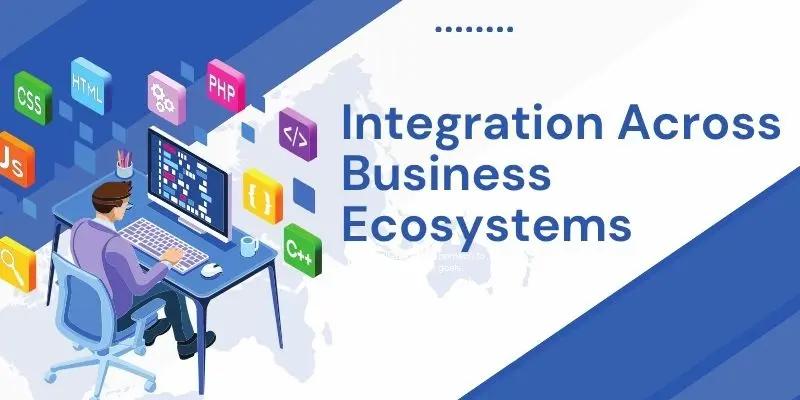
These integrations are transforming how companies operate. Instead of treating AI as an external tool, businesses can now use it directly within their existing systems. This makes adoption smoother, boosts productivity, and ensures that employees across all departments can benefit from AI without needing technical expertise.
By embedding its tools into major business ecosystems, OpenAI is turning artificial intelligence into a built-in part of modern work — not just an add-on, but a core feature of how companies function.
7. Empowering Businesses Through AI Innovation
OpenAI’s technology is not just about advanced algorithms — it’s about empowering businesses to work smarter, faster, and more creatively. By using AI models like GPT-5, companies can now transform the way they operate, from daily tasks to big strategic decisions.
One of the biggest benefits is productivity. OpenAI tools help employees save hours every day by automating time-consuming tasks. For example, AI can write emails, summarize reports, generate marketing content, and analyze complex data in seconds. This lets teams focus on higher-value work such as planning, innovation, and customer engagement.
Automation is another major impact area. Businesses are using OpenAI’s models to power chatbots, customer service systems, and data analysis platforms that run 24/7 without fatigue or error. These AI-driven systems handle thousands of customer queries or data points instantly, improving efficiency and cutting operational costs.
But OpenAI’s influence goes beyond productivity and automation — it also sparks creativity. Many companies now use AI to design campaigns, brainstorm product ideas, and explore new markets. With natural language generation and image tools, businesses can quickly turn ideas into content, prototypes, or marketing materials.
By combining intelligence, automation, and creativity, OpenAI is giving enterprises a competitive edge. Companies that once relied on manual work or limited data insights can now make faster, smarter, and more inspired decisions. In short, OpenAI’s innovation helps businesses move from traditional operations to AI-driven growth and transformation.
8. Monetization and Business Impact
OpenAI’s shift toward enterprise partnerships is not just a strategic move — it’s a complete rebuilding of its business model. By working with large organizations, OpenAI is creating new and stable revenue streams that go far beyond individual subscriptions.
In the early days, most of OpenAI’s income came from ChatGPT Plus plans and API usage by individual developers or small teams. While this model worked well for growth, it wasn’t built for long-term sustainability. Enterprise clients, on the other hand, bring consistent contracts, larger investments, and long-term relationships that strengthen OpenAI’s financial foundation.
Through its enterprise deals, OpenAI now offers custom pricing, tailored AI models, and premium support for corporate clients. These offerings create a high-value ecosystem where businesses pay for scalability, privacy, and dedicated AI performance. This approach not only increases profits but also deepens customer loyalty.
Partnerships with companies like Microsoft have also played a major role in OpenAI’s monetization strategy. Microsoft’s investment and integration of OpenAI’s technology into tools like Copilot have opened huge new revenue channels, while also giving OpenAI access to a massive global customer base.
Beyond direct partnerships, OpenAI’s influence is creating ripple effects across industries. Its enterprise tools are helping businesses save money through automation, increase sales with smarter marketing, and innovate faster with AI insights — all of which show the real-world business impact of AI adoption.
In short, by focusing on enterprise solutions, OpenAI is no longer relying only on public interest or subscriptions. It is building a scalable, profitable, and future-ready business model that positions the company as a central player in the global AI economy.
9. Competitive Landscape: Staying Ahead of Rivals
As OpenAI strengthens its focus on enterprise partnerships, it faces tough competition from other major players in the AI space — including Anthropic, Google, and Meta. Each of these companies is racing to capture the growing demand for AI in business, but OpenAI’s approach gives it a strong edge.
Anthropic, founded by former OpenAI researchers, is building its own family of models known as Claude. While Anthropic focuses heavily on safety, transparency, and responsible AI, it hasn’t yet matched OpenAI’s global scale or enterprise presence. OpenAI’s partnership with Microsoft gives it a significant advantage in reaching millions of business users worldwide — something Anthropic is still working toward.
Google is another powerful rival with its Gemini AI platform. Google has deep experience in cloud infrastructure and business software, which it uses to integrate AI into tools like Workspace, Gmail, and Docs. However, OpenAI’s ability to innovate faster and collaborate openly with developers and enterprises has helped it stay ahead in real-world adoption and usability.
Meta (Facebook’s parent company) has taken a different route by promoting open-source AI models like Llama. This strategy helps Meta attract researchers and developers, but it also limits direct monetization and enterprise control. In contrast, OpenAI’s closed but flexible approach — offering secure, customizable, and paid AI solutions — appeals more to large corporations that prioritize data privacy and reliability.
What truly sets OpenAI apart is its enterprise-first ecosystem. Through exclusive integrations with Microsoft, partnerships across industries, and a strong reputation for innovation, OpenAI is shaping itself as the go-to choice for serious business applications.
While rivals continue to grow, OpenAI’s mix of cutting-edge technology, trusted partnerships, and focus on real business value helps it stay one step ahead in the global AI race. It’s not just competing — it’s defining how enterprises will use AI in the next decade.
10. Ethical and Governance Challenges Ahead
As OpenAI expands its partnerships with global enterprises, it faces growing challenges around ethics, governance, and responsible AI deployment. While the move toward enterprise solutions brings great opportunities, it also raises serious questions about control, bias, and accountability.
One major concern is corporate control over AI technology. As OpenAI works with large companies, critics worry that too much power could end up in the hands of a few corporations. This concentration may lead to unequal access to AI, where only well-funded organizations benefit from the most advanced tools, leaving smaller businesses behind.
Another key issue is AI bias and fairness. Even the most advanced models can reflect bias based on the data they are trained on. For enterprises using AI in areas like hiring, finance, or customer service, biased outputs could lead to unfair decisions or discrimination. OpenAI must therefore ensure that its models are trained, tested, and monitored with strong fairness and transparency standards.

Data privacy and compliance are also central to governance. As businesses share sensitive data with OpenAI’s systems, the company must maintain strict safeguards to prevent misuse or leaks. Compliance with regulations like the EU’s AI Act and global data protection laws is becoming essential for maintaining trust and legitimacy.
To address these challenges, OpenAI is investing in ethical research, safety teams, and responsible-use policies. The company has also encouraged open dialogue about AI governance and shared responsibility between developers, governments, and enterprises.
In the long run, maintaining trust will be as important as innovation. OpenAI’s success in the enterprise world depends not only on how powerful its models become, but also on how responsibly they are used. By leading with ethics and transparency, OpenAI can build a future where AI serves both business goals and the greater good.
Conclusion
OpenAI Enterprise Partnerships mark the beginning of a new era in artificial intelligence. What started as a tool for individuals has evolved into a powerful engine driving business transformation across the world. By focusing on enterprise solutions, building trusted partnerships, and maintaining high ethical standards, OpenAI Enterprise Partnerships proves that AI can be both profitable and responsible. As more companies integrate OpenAI’s technology into their daily operations, these partnerships aren’t just shaping the future of business — they’re defining how the next generation of enterprises will grow, innovate, and compete in the age of intelligent automation.
FAQs
OpenAI’s shift means it is now focusing more on working with large companies rather than just individual users. The company aims to design AI tools that meet business needs like automation, data analysis, and secure communication. These partnerships help OpenAI create long-term relationships that are profitable and scalable. It marks a major step from being a consumer brand to becoming a global enterprise technology provider.
Businesses offer a more stable and predictable market compared to individual users. They bring higher-value contracts, ongoing projects, and larger-scale adoption. By focusing on enterprises, OpenAI can create customized AI systems for industries like finance, marketing, and healthcare. This not only ensures stronger revenue but also positions OpenAI as a key player in the business AI revolution.
Microsoft has played a major role in helping OpenAI grow its enterprise presence. Through Azure, OpenAI’s models can run on a powerful and secure cloud platform built for business use. Microsoft has also integrated OpenAI technology into products like Word, Excel, and Teams via Copilot, giving millions of companies easy access to advanced AI. This partnership creates a shared ecosystem that benefits both brands and their users.
Enterprises using OpenAI’s tools can automate repetitive tasks, analyze data faster, and improve decision-making. AI helps teams work more efficiently and focus on strategy instead of manual work. Companies can also train AI models on their own data for personalized results. Overall, it boosts productivity, reduces costs, and encourages innovation across different departments.
OpenAI has built strong privacy controls to protect sensitive business information. Enterprise clients have dedicated environments, encrypted data storage, and full control over what data is shared. OpenAI also complies with global standards like GDPR and SOC 2, ensuring safe data handling. This makes its enterprise solutions trusted by organizations that require high security and confidentiality.
Working with powerful corporations can create concerns about control and fairness in the AI industry. If only large enterprises can afford advanced AI, smaller businesses may struggle to compete. There are also risks of bias or misuse of AI tools when used at a massive scale. OpenAI must balance innovation with responsibility to ensure AI benefits everyone, not just the biggest players.
OpenAI invests heavily in responsible AI research to reduce bias, improve transparency, and ensure fair use. The company has strict guidelines on data usage and continues to update them as new risks appear. Ethical governance teams monitor how AI models are trained and deployed in corporate settings. This focus on accountability helps build trust with businesses and the public alike.
OpenAI leads in innovation speed and enterprise adoption compared to many rivals. Google’s Gemini and Anthropic’s Claude focus more on safety and open research, while Meta promotes open-source models like Llama. OpenAI, however, offers complete enterprise solutions with strong customization, privacy, and support. Its partnership network gives it a stronger foothold in the corporate world.
Yes, smaller businesses can benefit indirectly from OpenAI’s enterprise partnerships. As AI tools improve for large corporations, their technology eventually becomes more accessible to smaller firms through APIs and affordable plans. This trickle-down effect helps startups and small companies use high-quality AI for marketing, customer service, and data analysis. OpenAI’s long-term goal includes making AI scalable for businesses of all sizes.
This shift signals a future where AI becomes an essential part of every business operation. OpenAI is leading the way by building secure, customizable, and intelligent tools that help companies work smarter. It’s not just changing how businesses use technology — it’s reshaping how they innovate and grow. The enterprise era of OpenAI will define the next chapter of global business transformation.

The Future of Freelancing - How AI, Skills, and Global Trends Are Redefining Work in 2030




- Be Respectful
- Stay Relevant
- Stay Positive
- True Feedback
- Encourage Discussion
- Avoid Spamming
- No Fake News
- Don't Copy-Paste
- No Personal Attacks
- Be Respectful
- Stay Relevant
- Stay Positive
- True Feedback
- Encourage Discussion
- Avoid Spamming
- No Fake News
- Don't Copy-Paste
- No Personal Attacks
